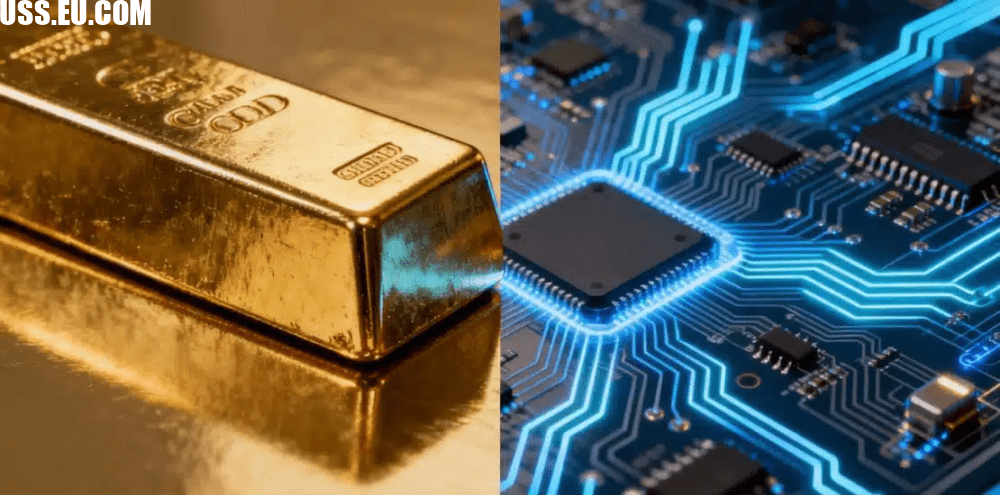
I’ve always been skeptical about jumping on every new financial trend, but lately I’ve decided to dig deeper into the markets to figure out where to park my savings. In a world where gold and silver have been safe havens for centuries, cryptocurrencies and blockchain tech are bursting in like a fresh storm, promising real disruption. To stay on top of things, I often check out BlockchainReporter, where they break down the latest crypto insights, and it’s helped shape my own thinking. In this piece, I’ll share my personal take on comparing these assets, drawing from current trends as of early 2026, and speculate on what might lie ahead—maybe hybrid strategies blending the old and new will become the smart play.
Let’s start with the classics: gold and silver. Gold remains the ultimate symbol of stability. Its price tends to climb during economic uncertainty, as we’ve seen through pandemics, wars, and inflation spikes. Right now in January 2026, gold is hovering around $4,900–$5,000 per ounce (some spots even hitting near $4,950 recently), which feels like a massive run-up from just a couple of years ago. I figure this surge ties into ongoing inflation worries, central bank buying, and a weakening dollar in certain periods. The beauty of gold is its tangibility—you can hold it, store it in a vault, and it doesn’t rely on electricity or networks. No hackers can steal it if it’s physical. But the downsides are real: storage costs money, moving it is a hassle, and liquidity isn’t always instant unless you’re dealing with ETFs. For someone like me who leans toward long-term holding, gold feels rock-solid but kind of boring. Historically, its average annual return over the past decade has been in the 5–10% range—not bad for preservation, but nothing explosive.
Silver, on the other hand, is gold’s more volatile sibling with extra upside from real-world use. Beyond being a store of value, silver powers electronics, solar panels, EVs, and medical gear. With the green energy boom still accelerating in 2026, industrial demand could keep pushing it higher. Silver prices have been wild lately—trading around $96–$103 per ounce recently, with some days spiking toward $100+ and setting new highs. That’s a huge jump, and I suspect supply constraints (aging mines, strikes in places like Peru) are playing a big role alongside demand. My hunch: silver could deliver 20–50% gains in strong years, but it crashes harder during slowdowns when factories cut back. It’s cheaper and more accessible than gold, making it great for diversification or hedging inflation. Yet in our increasingly digital economy, I wonder if its industrial edge might fade if alternatives emerge or if recessions hit hard.
Now, shifting to crypto—Bitcoin is often dubbed “digital gold,” and there’s logic to that. Since 2009, its journey from zero to peaks well above $100k (though it’s pulled back to around $88,000–$90,000 in recent trading as of January 2026) has been mind-blowing. My reasoning: with spot ETFs approved in major markets, institutional adoption growing, and fixed supply capped at 21 million coins, Bitcoin mimics gold’s scarcity while adding portability and divisibility. No vaults needed—just a wallet. But the risks are massive: we’ve seen 50%+ drops in months, regulatory crackdowns, exchange hacks (remember FTX?), and energy debates around mining. Ethereum takes it further with smart contracts, DeFi, NFTs, and Web3 apps—it’s not just a store of value but a whole ecosystem, more like “digital silver” with utility baked in.
Looking at market connections, precious metals often move inversely to the dollar: weak USD pushes gold and silver up. Crypto sometimes tracks tech stocks (like Nasdaq), but it can decouple during risk-off periods. In 2025–2026 so far, gold and silver have had monster years (gold up hugely, silver even more volatile and outperforming in percentage terms at times), while Bitcoin has lagged or corrected after earlier highs. Some analysts point out that metals surged on macro fears, while crypto faced its own headwinds. I suspect tokenized real-world assets (RWAs) like Pax Gold could bridge the gap—own physical gold via blockchain tokens for instant liquidity and global access. That solves storage issues and blends the best of both. Imagine tokenized silver or even real estate on chain—no middlemen, fractional ownership, 24/7 trading.
Regulation is another big factor. Gold and silver have centuries of established rules, futures markets, and ETFs with few surprises. Crypto is still the Wild West: MiCA in Europe is making it safer, but bans or taxes elsewhere loom. My guess for 2026: clearer rules draw in big money, stabilizing Bitcoin as a “blue-chip” asset. Silver faces supply risks (geopolitical mine issues), gold manipulation whispers from banks, but both endure. Crypto’s volatility might ease as adoption grows.
Other angles worth considering: tokenized assets could revolutionize everything from property to commodities. Tech stocks tied to crypto (like companies holding Bitcoin) link the worlds. In recessions, metals often hold better initially, while crypto rebounds faster in bull phases. Environmentally, gold mining pollutes, silver too, but crypto’s shift to proof-of-stake cuts energy use dramatically—ESG-focused investors might lean that way.
Wrapping up my thoughts: after digging in, I don’t see crypto fully replacing gold or silver—they serve different roles. Gold for ultimate safety, silver for industrial leverage, Bitcoin for scarcity + digital mobility. My personal hunch for 2026: diversify—maybe 40% metals, 30% crypto, rest in equities or cash. Some forecasts even see gold pushing toward $5,500, silver to $150, Bitcoin above $150k if momentum returns. These are just my assumptions based on charts, news, and gut feel—not advice.
Start small if you’re new like me: grab a bit of physical silver or gold, dip into Bitcoin or ETH, and watch how they interact. The markets are evolving fast, and blending traditional havens with blockchain might be the winning formula ahead.

I welcome you to my article feed, I hope you liked my content and be sure to leave a comment or rating. Your feedback will be an impetus for me…