By Bloggers News, Senior Commodity Analyst at USS.eu.com
Monday, March 2, 2026
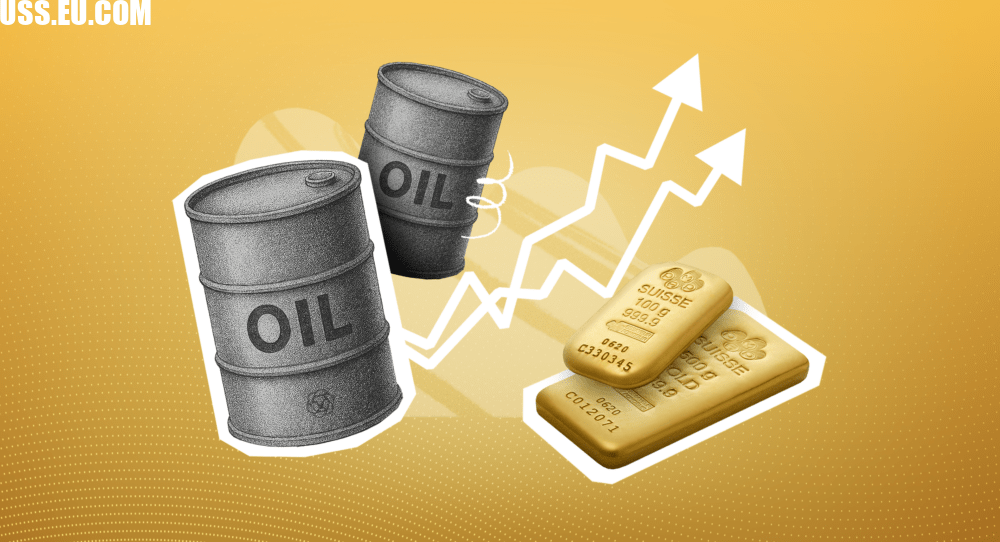
Global markets opened Monday with sharp moves in key commodities as Brent crude surged as much as 13% before settling near $79 per barrel and gold tested the $5,400 level. The driver is heightened geopolitical risks in the Middle East and potential disruptions to shipping in the Strait of Hormuz, which handles roughly 20% of global oil trade.
Here is a clear breakdown of which major businesses and countries are likely to feel the impact first this week — and which ones will be forced to raise their selling prices.
Immediate Losers: Aviation Sector
Airlines face the most direct and fastest hit. Jet fuel represents 28-35% of operating expenses for many carriers. With the rapid oil price spike, major airlines including Delta Air Lines, United Airlines, Lufthansa Group, Japan Airlines, and ANA Holdings are expected to implement or expand fuel surcharges as early as this week. Historical patterns suggest ticket prices on both domestic and international routes could increase by 5–8% in the short term to protect margins. Carriers with limited hedging will see the sharpest quarterly margin compression.
Logistics and Shipping Companies Under Pressure
Global shippers and logistics giants such as Maersk, MSC, FedEx, and UPS will see higher bunker fuel costs. Several shipping lines have already signaled readiness to adjust freight rates upward. Expect new surcharges on ocean and air cargo services to be announced in the coming days, directly affecting supply chain costs for manufacturers and retailers. Unhedged operators risk losses running into hundreds of millions in Q1.
Petrochemicals and Downstream Manufacturing
Chemical and plastics producers are next in line. Companies like Dow Inc., BASF, LyondellBasell, and Asian players such as Denka are seeing sharp increases in naphtha and feedstock costs. These firms typically pass on raw material inflation to customers within 1–3 weeks. Price increases for plastics, resins, packaging materials, tyres, and paints are highly likely to be communicated this week or early next. This will ripple into FMCG giants (Unilever, Procter & Gamble, Nestlé) forcing selective retail price hikes on packaged goods by Q2.
Automotive and Energy-Intensive Industries
Higher oil indirectly dampens demand while raising costs for plastics and logistics. Volkswagen, Toyota, Ford, and General Motors could face margin compression of 1-2%; expect selective price hikes on new models and announcements of supply chain adjustments. Energy-intensive manufacturers in Europe may see production cost inflation of 3-7% in the short term.
Gold Market Ripples
While gold’s surge to $5,400+ is primarily a safe-haven play, it creates mixed effects. Gold mining companies including Newmont Corporation, Barrick Gold, and Polyus will enjoy expanded margins due to operating leverage. However, the luxury jewelry sector (Tiffany & Co., Pandora) faces higher input costs and may be forced to raise retail prices or shift to alternative materials, potentially dampening demand.
Country-Level Exposure
Asia’s major importers are most vulnerable: India, China, Japan, and South Korea source a significant portion of their oil through the Strait of Hormuz. Higher energy costs will add to inflationary pressures and weigh on industrial activity. Europe (particularly Germany and energy-intensive industries) will face secondary effects through higher transport and input costs.
Oil-exporting nations including Russia, Saudi Arabia, the UAE, Canada, and Norway stand to gain from improved revenues and trade balances. Russian energy majors (Rosneft, Lukoil) and gold miners (Polyus) are already benefiting on local exchanges.
Two Scenarios for This Week
- Escalation scenario (~50% probability): Brent could test $90–100, accelerating cost pass-through across aviation, logistics, and chemicals. Gold may push toward $5,500–5,650.
- De-escalation scenario: Oil may retreat to $72–75 and gold to $5,200–5,300 range, providing short-term relief for cost-sensitive businesses.
Bottom Line
Companies heavily exposed to fuel and feedstock costs have limited ability to absorb this week’s commodity spike. Many will begin passing higher expenses to customers immediately. Corporate procurement teams and investors should closely watch airline earnings calls, shipping rate announcements, and petrochemical pricing updates over the next 72 hours.
We will provide regular updates as the situation develops.
Bloggers News is a Senior Commodity Analyst at USS.eu.com, specializing in energy and precious metals markets.

I welcome you to my article feed, I hope you liked my content and be sure to leave a comment or rating. Your feedback will be an impetus for me…