File conversion sounds like a solved problem—until it suddenly isn’t. Anyone who works with documents, media, data exports, or software integrations eventually runs into the same reality: files rarely arrive in the format you actually need. A client sends a DOCX when you require PDF. A design team shares an AI or PSD, but the developer needs SVG or PNG. A legacy system exports XLS instead of CSV. An application generates HTML, but downstream workflows expect DOCX or PDF/A.
This is where online file converters and file converter APIs quietly keep modern digital work moving. They sit in the background of businesses, apps, and platforms, translating information from one form to another—accurately, securely, and at scale.
This article explores why file conversion remains essential, how real-world scenarios depend on it, and how modern cloud-based tools—like Docpose.cloud and its REST API—fit naturally into professional workflows without the friction of desktop software or custom conversion pipelines.
The Hidden Role of File Conversion in Everyday Digital Work
File formats are, in essence, agreements. They define how information is stored, read, rendered, and shared. Problems arise when two systems don’t speak the same “file language.”
Here are a few everyday examples most teams recognize instantly:
- A legal department needs PDF/A for compliance, but receives Word files.
- An education platform stores submissions as DOCX, but archives everything as PDF.
- A SaaS tool exports reports in HTML, but enterprise clients require DOCX.
- A marketing team needs JPG previews from layered design files.
- A data analyst receives XLSX files but must ingest CSV into a database.
In each case, the information is present—but unusable without conversion.
Historically, these problems were solved manually. Someone opened a file in desktop software, clicked “Save As,” selected a format, and hoped nothing broke. That approach doesn’t scale, doesn’t automate, and doesn’t fit modern cloud-based systems.
Online File Converters: Accessibility Without Complexity
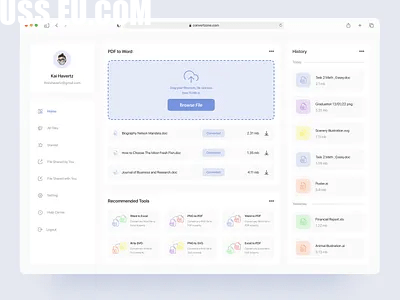
An online file converter removes most of that friction. Instead of installing software or worrying about compatibility, users upload a file, choose an output format, and receive a converted result—often in seconds.
This simplicity matters more than it might seem.
Real-World Scenario: Freelancers and Remote Teams
Consider a freelance writer working with clients across different industries. One client requests DOCX, another demands PDF, and a third wants HTML for a CMS. The writer doesn’t want to manage multiple tools or worry about version mismatches. An online converter becomes a neutral bridge between requirements.
The same applies to remote teams. When files move across borders, operating systems, and toolchains, relying on a browser-based solution eliminates “works on my machine” problems.
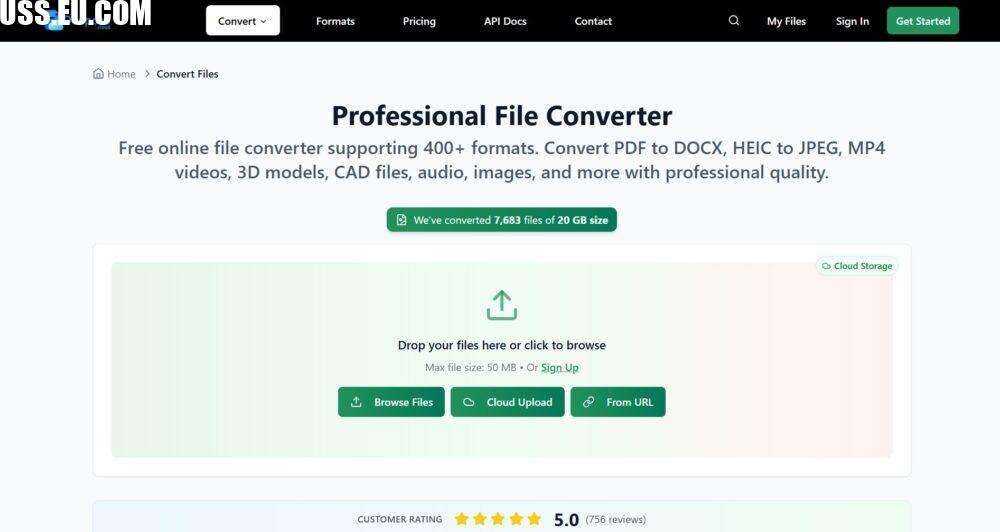
Platforms like Docpose.cloud provide this kind of conversion environment—accessible from anywhere, without forcing users into a specific software ecosystem.
When Online Conversion Isn’t Enough: Enter the File Converter API
While online tools are ideal for individuals and small teams, businesses and developers often need something deeper: automation.
A file converter API allows applications to send files programmatically, convert them automatically, and retrieve results without human intervention. This is how conversion becomes infrastructure rather than a manual task.
Real-World Scenario: SaaS Platforms
Imagine a document management SaaS that allows users to upload files in any format. Internally, the platform standardizes everything to PDF for previews and archiving.
Manually converting each upload isn’t an option. Instead, the application uses a REST API to:
- Receive a file upload.
- Send it to a conversion service.
- Track conversion status.
- Store the converted output.
- Present it back to the user.
This entire flow happens silently, behind the scenes.
The Docpose.cloud API is designed for exactly this type of use case—providing endpoints that developers can integrate directly into web apps, desktop software, or backend services.
Why File Conversion Is Still a Hard Problem
At a glance, converting files sounds simple. In practice, it’s anything but.
1. Format Complexity
Some formats are straightforward (TXT to PDF). Others are deeply complex:
- DOCX includes styles, tables, embedded media, and layout logic.
- PDF may contain fonts, vector graphics, annotations, and security rules.
- Image formats vary widely in color spaces, compression, and metadata.
Accurate conversion requires engines that understand both the source and destination formats in detail.
2. Consistency and Fidelity
A conversion that technically “works” but breaks layout, fonts, or structure is often worse than no conversion at all. Businesses rely on consistency—especially for legal, financial, and branded documents.
3. Scale and Performance
Converting one file is easy. Converting thousands per hour is not. APIs must handle concurrency, queues, retries, and failures gracefully.
4. Security and Privacy
Files often contain sensitive data. Conversion services must process files securely, isolate workloads, and avoid unnecessary retention.
Modern cloud platforms like Docpose.cloud exist because building and maintaining this infrastructure in-house is expensive, time-consuming, and error-prone.
Online File Conversion in Industry-Specific Scenarios
Legal and Compliance
Law firms and compliance teams frequently require standardized formats like PDF/A for long-term archiving. Incoming documents may arrive as Word, email attachments, or scanned images.
An online converter enables quick normalization, while an API ensures that document ingestion pipelines remain compliant by default.
Education and E-Learning
Educational platforms handle assignments, lecture notes, and certificates in many formats. Teachers upload DOCX, students submit PDFs, and platforms often generate final documents for records.
Automated conversion ensures consistency while reducing administrative overhead.
Marketing and Content Teams
Design assets come in PSD, AI, SVG, and other formats. Web teams need optimized images; content teams need PDFs; developers need lightweight assets.
Conversion tools act as translators between creative and technical roles.
Software Development and Reporting
Applications generate output in formats optimized for machines—JSON, HTML, XML—but humans often need DOCX or PDF.
A conversion API bridges that gap, turning machine-friendly output into human-friendly documents.
The Shift Toward API-First Conversion
Modern software architecture favors modular services. Instead of monolithic systems that “do everything,” teams assemble solutions from specialized components.
File conversion fits naturally into this model.
Why Developers Prefer APIs
- Automation: No manual steps.
- Scalability: Convert hundreds or thousands of files programmatically.
- Integration: Works with existing workflows and pipelines.
- Flexibility: Choose formats dynamically based on context.
The REST API provided by Docpose.cloud allows developers to treat conversion as a service—triggered by events, jobs, or user actions—rather than a separate operational concern.
You can explore how this works in practice through their API documentation at https://docpose.cloud/api-docs, which outlines endpoints, parameters, and response structures designed for real-world integration.
Online Tools vs APIs: Choosing the Right Approach
Both online converters and APIs serve important roles. The key is knowing when to use each.
Use an online file converter when:
- You need quick, ad-hoc conversions.
- You’re working manually with files.
- You want zero setup and instant results.
Use a file converter API when:
- Conversion is part of an application workflow.
- You need automation and scalability.
- Files are processed continuously or in bulk.
- You want consistent results without manual steps.
Many teams start with online tools and later graduate to API integration as their needs mature.
Security, Trust, and Modern Conversion Platforms
As conversion moves into the cloud, trust becomes central. Users need assurance that files are handled responsibly.
Modern platforms focus on:
- Encrypted data transfer.
- Controlled file lifetimes.
- Isolated processing environments.
- Clear usage policies.
While no service should be chosen blindly, cloud-native tools like Docpose.cloud are built with these expectations in mind, reflecting how professional users actually work today.
The Future of File Conversion
File formats will continue to evolve. New media types, AI-generated content, and platform-specific formats will create ongoing compatibility challenges.
At the same time:
- Remote work will increase cross-tool collaboration.
- SaaS platforms will demand seamless automation.
- Compliance requirements will tighten around document standards.
All signs point toward conversion as infrastructure, not as an afterthought.
Online converters will remain essential for accessibility, while APIs will quietly power the systems users rely on every day—often without realizing it.
Final Thoughts
File conversion is one of those technologies that rarely gets attention—until it fails. Yet it underpins workflows across industries, from solo freelancers to enterprise platforms.
Online file converters make conversion accessible and immediate. File converter APIs make it scalable and invisible.
When approached thoughtfully, tools like Docpose.cloud and its REST API don’t feel like ads or add-ons. They feel like utilities—quietly enabling work to flow between formats, systems, and people.
In a digital world built on interoperability, that quiet reliability matters more than ever.